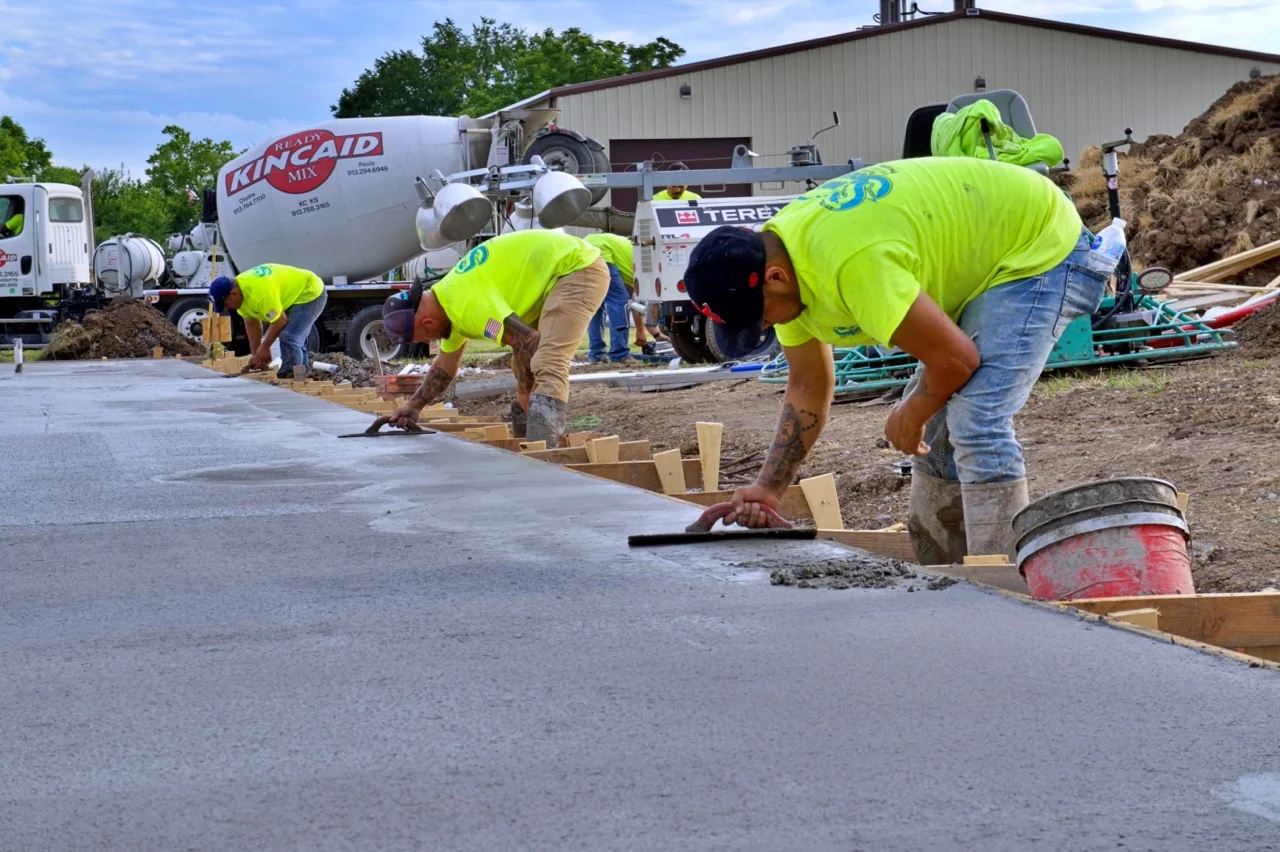
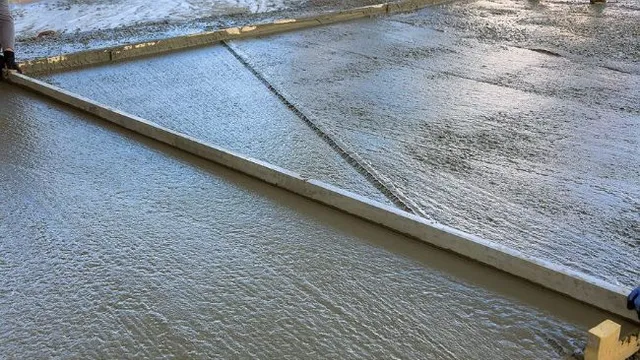
Here's a concrete truth most contractors don't lead with: concrete will crack. Thermal expansion and contraction, sub-base movement, and shrinkage as concrete cures all create stress in a slab. The question isn't whether cracking will occur — it's whether it happens where you planned for it or randomly across your beautiful new driveway.
What Control Joints Do
A control joint is a weakened plane — either formed during the pour or saw-cut afterward — that creates a deliberate point of weakness in the slab. When concrete needs to crack (and it will), it cracks along that weakened plane rather than randomly. The crack is hidden inside the joint, at the bottom of the groove, not visible on the surface. Done correctly, a cracked slab with control joints looks identical to an uncracked one.
Spacing Rules
A common rule of thumb: control joints should be spaced at a distance in feet roughly equal to 2.5 times the slab thickness in inches. For a 4-inch driveway, that's approximately every 10 feet. Joints should also be placed at all re-entrant corners (where the slab changes direction) and where the slab meets existing structures.
Depth
For a control joint to work, it needs to be at least 1/4 the depth of the slab — 1 inch deep for a 4-inch slab. Shallow scoring that looks like a joint but doesn't reach the required depth won't control cracking as intended.
What Happens Without Them
A slab without properly placed and spaced control joints will crack — and it will crack wherever the stress concentrates, which is unpredictable and often through the middle of the slab in a visible location. Don't let any contractor skip this step. At USA Concrete Co., joint placement is standard and specified in every estimate. Call (479) 551-1642.