Weather is the variable no contractor fully controls. If rain hits during a concrete pour, the outcome depends on timing, severity, and how the situation is handled. Here's the honest breakdown.
Light Rain During Placement: Usually Manageable
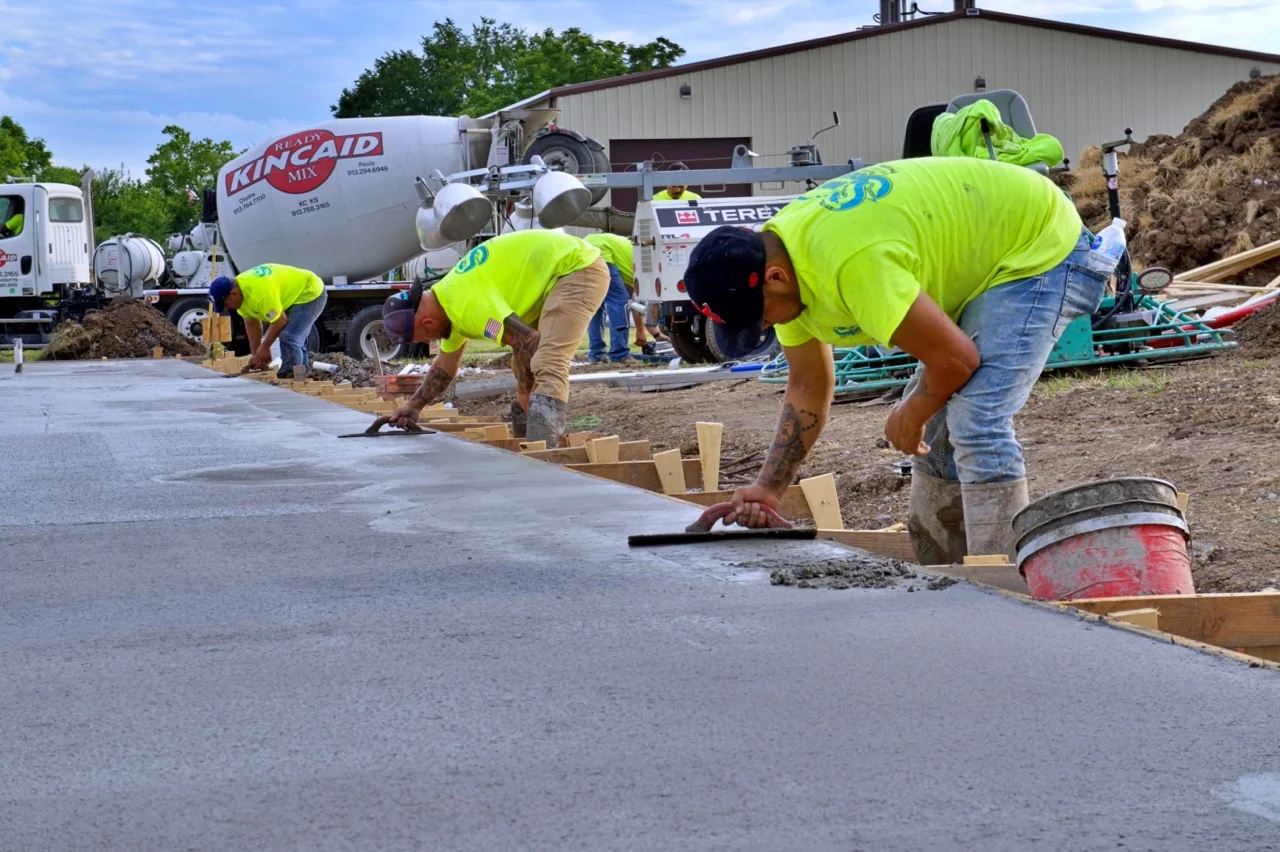
Light rain that begins during concrete placement — before finishing has started — is generally manageable. The concrete can typically be placed and screeded normally, and the surface finishing proceeds with attention to the conditions. Light rain doesn't necessarily add enough water to the surface to compromise the mix design.
Heavy Rain Is a Problem
Heavy rain adds water to the concrete surface during or after placement. This dilutes the surface layer of the concrete, raising the water-to-cement ratio at the top of the slab. The result is a weaker, more porous surface layer that is prone to scaling, flaking, and cracking. We will cover or pause a pour if significant rain arrives — the risk to the finished surface isn't worth pushing through.
Rain After Finishing
Rain that arrives after the concrete is finished and has begun to set — typically 4–6 hours after placement — is much less of a concern. By that point, the surface has developed enough structure that light rain won't damage it. Heavy rain can still etch an early-stage surface, which is why we sometimes cover fresh pours overnight.
Our Approach: Proactive, Not Reactive
We monitor weather forecasts before and during every project. If significant rain is likely on a pour day, we'll call you to discuss rescheduling. We'd rather delay a day than produce a compromised slab. Questions about how we handle your specific project schedule? Call (479) 551-1642.