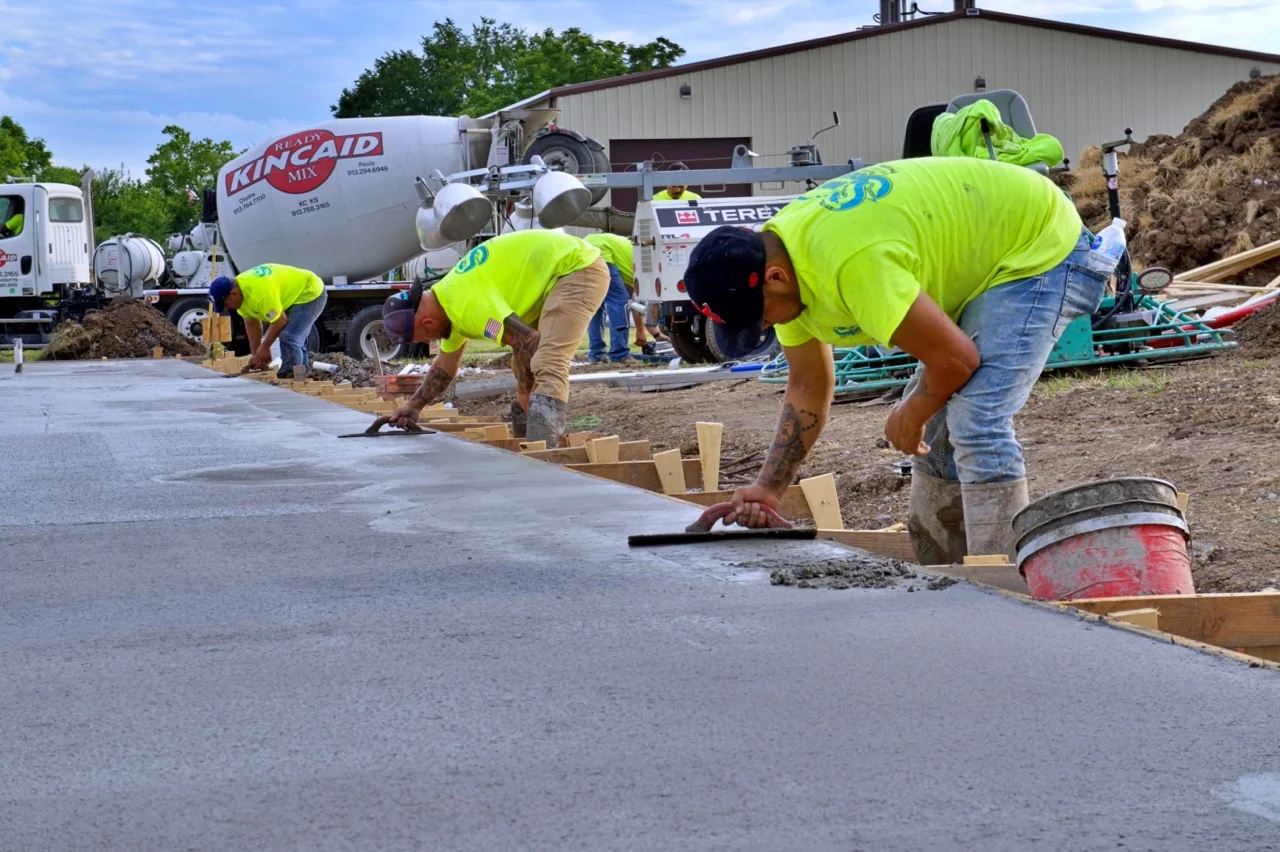
Most people know that concrete comes in a rotating drum truck. But what happens before the truck arrives — and during the delivery — directly affects the quality of your slab. Here's how it works.
The Batch Plant
Concrete is mixed at a regional batch plant — a facility that weighs and combines cement, aggregates (sand and gravel), water, and any admixtures (accelerators, plasticizers, air-entraining agents) according to a specified mix design. In the Fort Smith area, there are local ready-mix suppliers who produce concrete to various specifications. The mix design determines the concrete's strength, workability, and durability.
The Truck
The mixing drum on a ready-mix truck continues to rotate during transit to keep the concrete homogeneous. Concrete has a limited working life — typically 1.5–2 hours from the time water is added to the mix. Plants and contractors coordinate delivery timing so the material arrives and can be placed before it begins to set.
Why Mix Design Matters
Not all ready-mix concrete is the same. Different water-to-cement ratios produce dramatically different strength outcomes — lower w/c ratio = stronger concrete. Air entrainment (tiny air bubbles) improves freeze-thaw resistance. We specify the mix design in writing on every estimate — you know exactly what you're getting. Low bids sometimes use weaker mix designs; our estimates spell out the specs clearly.
On-Site Decisions
One of the most important field practices: never add water to the truck on-site to make placement easier. Adding water raises the w/c ratio and weakens the concrete. We don't do this. Questions about our process? Call (479) 551-1642.