A pressure washer is the most effective tool for cleaning concrete, but it requires some technique to get great results without damaging the surface. Here's a practical guide.
Pressure Settings
For concrete surfaces, 2,000–3,000 PSI is the effective range. Below 1,500 PSI, you're not moving dirt effectively. Above 3,500 PSI on standard residential concrete, you risk etching the surface or cutting into sealer or stamped finishes. If your machine has variable pressure, start at the lower end and increase as needed.
Nozzle Choice
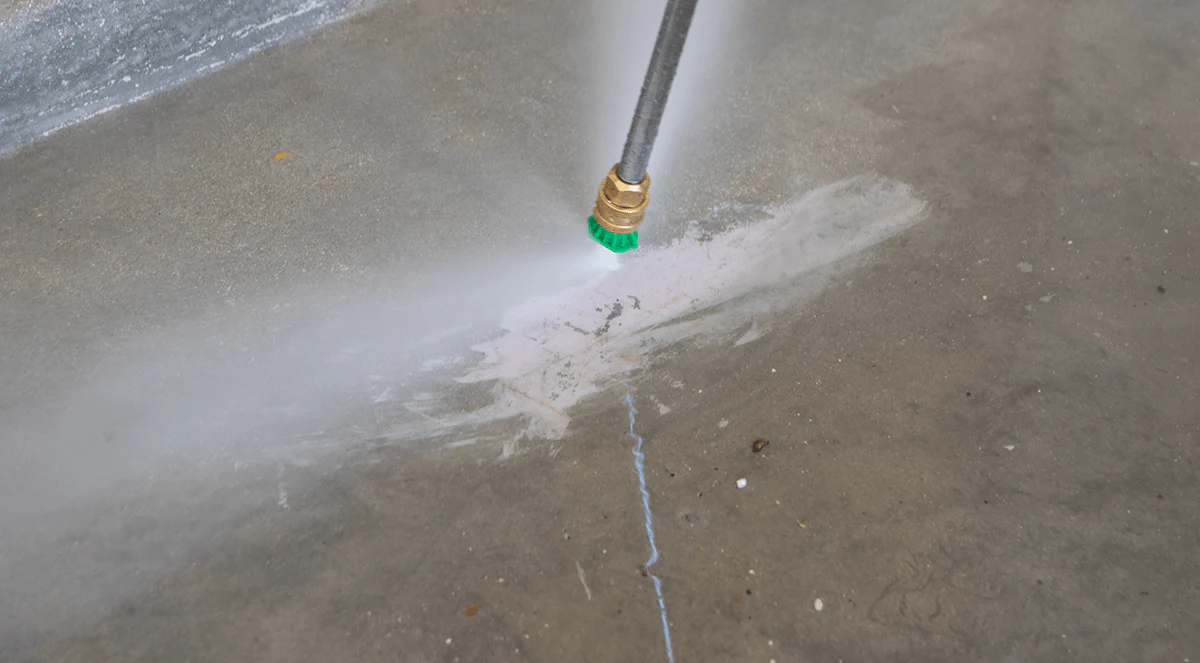
Use a 25-degree (green) or 40-degree (white) nozzle for general concrete cleaning. The red zero-degree nozzle is too concentrated for surface cleaning and will etch and damage concrete. A rotating surface cleaner attachment — a spinning head that connects to the wand — gives more consistent coverage and eliminates the streaking pattern that can result from a bare lance.
Technique: Overlapping Passes
Work in consistent, overlapping passes rather than randomly spraying. Keep the nozzle 8–12 inches from the surface and maintain a consistent angle. Moving too slowly can etch; moving too quickly leaves dirt behind. A rhythmic, consistent sweep produces the best results. Work with the slope so dirty water flows away from areas you've already cleaned.
Pre-Treat Problem Areas
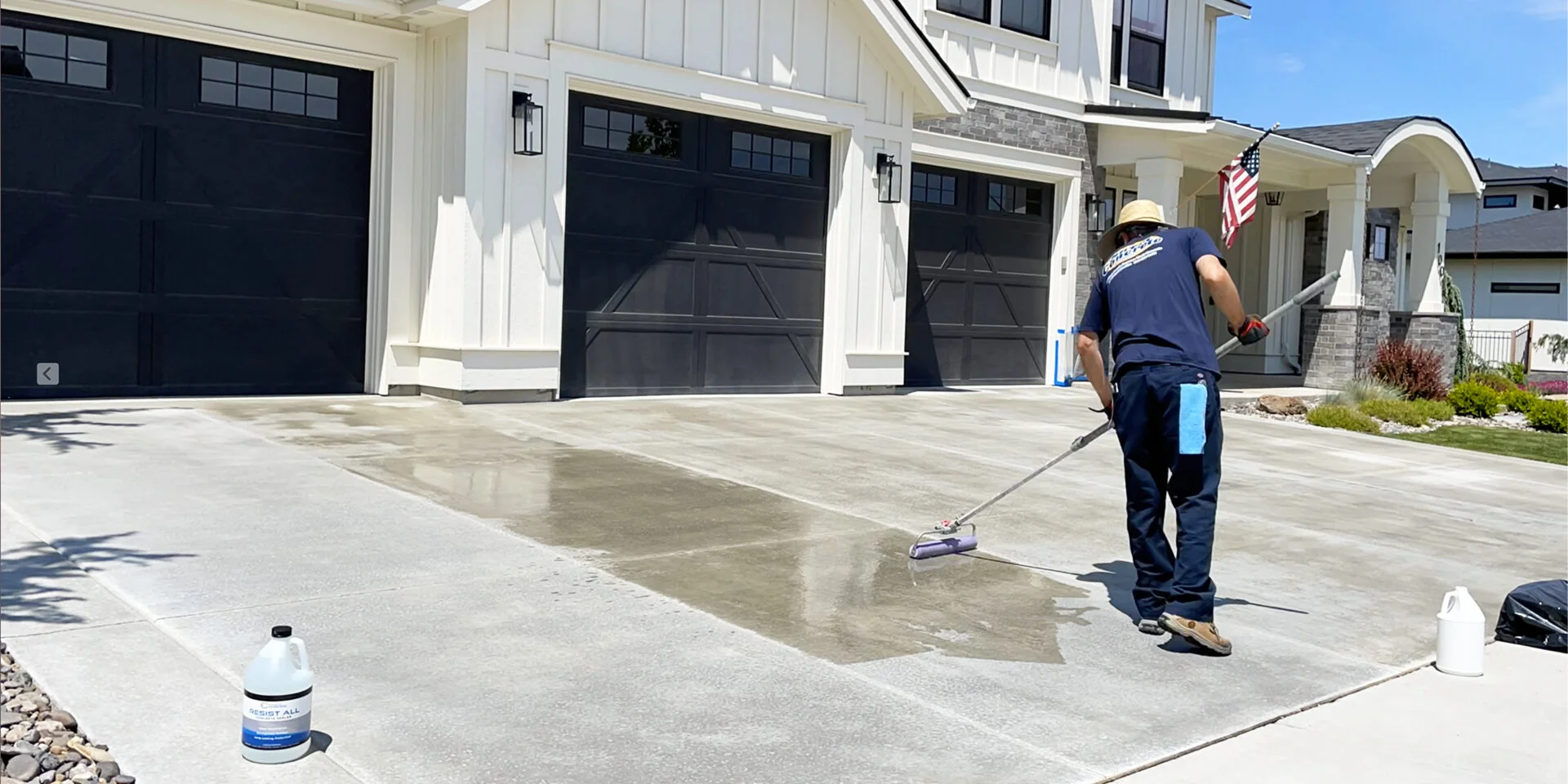
For oil stains, tire marks, or mold and mildew, apply an appropriate cleaner and let it dwell for 10–15 minutes before pressure washing. The cleaner does the chemical work; the pressure washer does the mechanical work. Together they're far more effective than either alone. If you're planning to reseal after cleaning, make sure the surface is fully dry — usually 24–48 hours after washing.