Outdoor concrete patios are exposed to everything: food and drink spills, plant runoff, rust from furniture, mold and mildew, and more. Most of these stains respond well to targeted treatment. Here's a guide to the most common ones.
Rust Stains
Rust stains come from metal furniture, planters, or rebar that's been exposed at the surface. They're orange-brown and don't respond to general cleaners. Use a dedicated rust remover for concrete — products containing oxalic or phosphoric acid work well. Apply, let it dwell, scrub, and rinse. Multiple applications may be needed for old stains. Afterward, consider adding rubber feet to your furniture to prevent recurrence.
Organic Stains (Food, Wine, Leaves, Algae)
Most organic stains respond to a solution of oxygen bleach (sodium percarbonate) and water — more gentle than chlorine bleach and less damaging to concrete. Apply, scrub, and rinse. For black mold or mildew, a diluted bleach solution (1 part bleach to 10 parts water) works, but avoid overuse — it can lighten colored concrete and degrade sealer.
Fertilizer Stains
Fertilizer dropped on concrete causes orange-yellow staining from the iron in the product. Rinse immediately with water if you catch it fresh — this is one case where speed matters. Set-in fertilizer stains respond to the same oxalic acid treatments used for rust.
Efflorescence (White Powder)
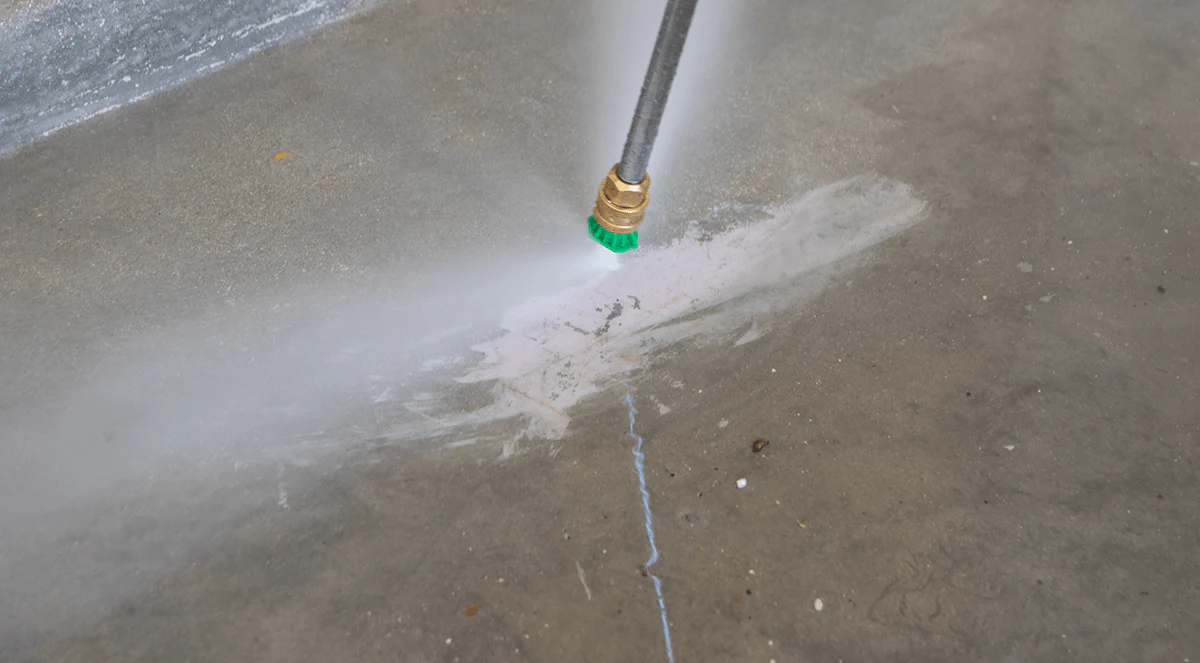
White chalky deposits on concrete are efflorescence — minerals from the concrete mix migrating to the surface with water. It's a cosmetic issue, not structural. A stiff brush or diluted muriatic acid solution removes it. Address any water drainage issues that are driving moisture through the slab to reduce recurrence.
General Rule
The fresher the stain, the easier the removal. Most concrete patios benefit from a thorough pressure washing every 1–2 years to prevent stains from setting in deeply. Questions? Call (479) 551-1642.