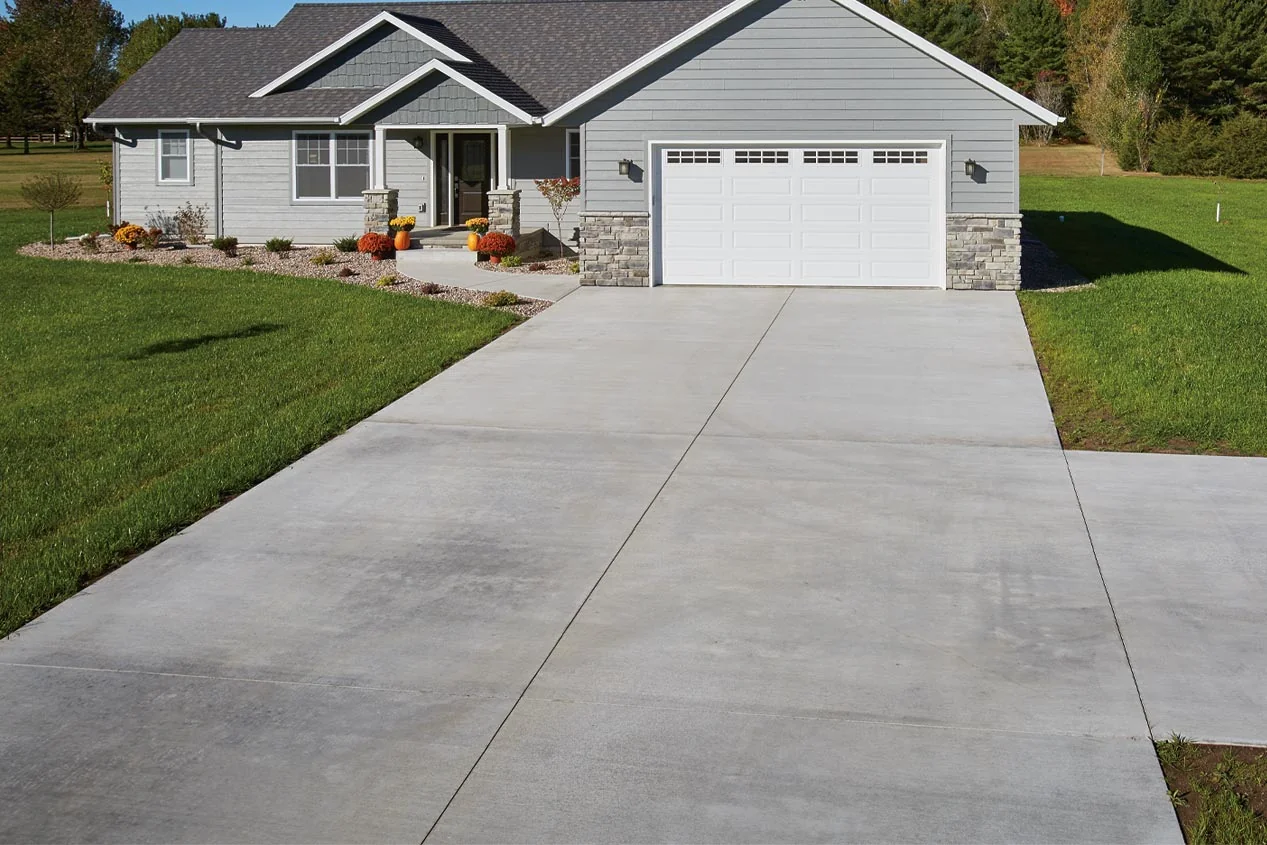
Driveway edges are more than a cosmetic detail — they affect structural integrity, drainage, and how the concrete holds up where it meets landscaping, grass, or curbing. Here's what to know before your project.
Rounded Edges (Bull Nose)
Rounding the edges of a concrete slab with an edging tool is standard practice on most residential driveways. A rounded or bull-nose edge is less prone to chipping than a sharp 90-degree edge and gives the slab a finished, professional appearance. It's the most common choice and costs nothing extra — it's part of proper finishing technique.
Concrete Curbing
Adding a concrete curb along the sides of a driveway defines the edge clearly and prevents the edges from settling or eroding over time. It's particularly useful on properties where the driveway meets grass or landscaping — keeping soil from undercutting the edges and improving drainage control.
Header Boards and Borders
Decorative borders — a contrasting color or texture strip around the perimeter of the slab — add visual interest and can create a natural visual boundary. This works especially well with stamped concrete, where a different pattern or color on the border frames the main surface.
Edge Reinforcement
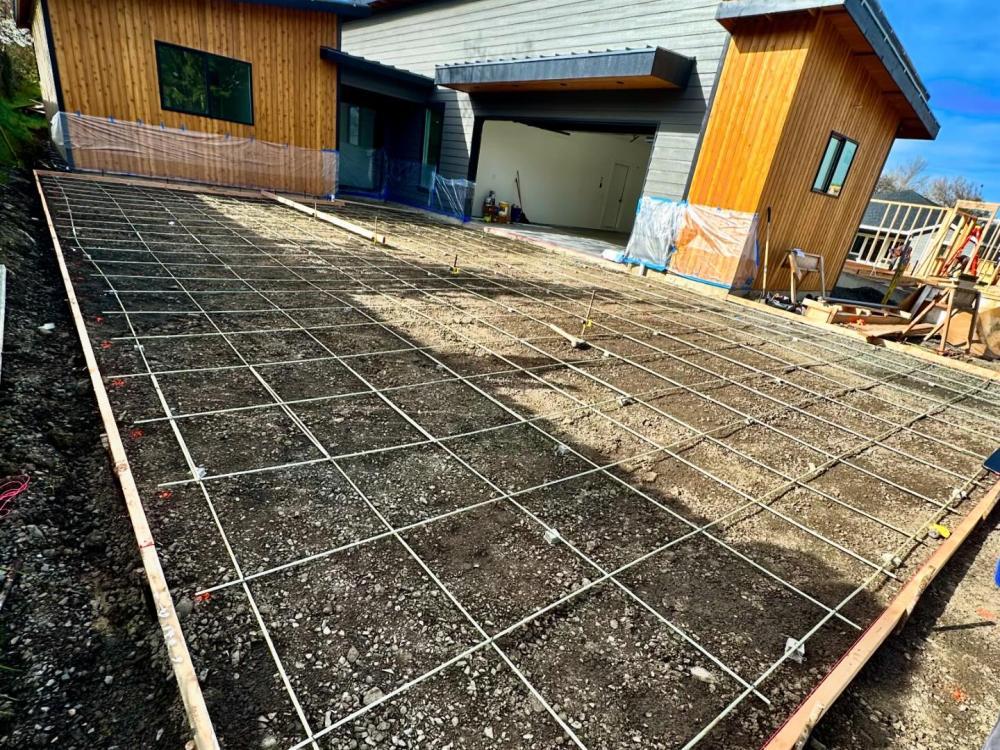
Regardless of finish style, we reinforce the edges of driveways with additional rebar or thickened edge sections on jobs where edge cracking is a concern — particularly on sloped driveways or where vehicle overhang is likely. This is a structural decision, not just aesthetic. We'll walk you through the right approach for your specific site during the free estimate. Call (479) 551-1642.