Concrete might be the most low-maintenance surface you can put on your property, but "low maintenance" doesn't mean "no maintenance." Regular cleaning keeps your driveway, patio, and walkways looking their best, prevents staining from becoming permanent, and extends the life of any sealer on the surface.
Routine Cleaning: The Basics
For day-to-day upkeep, a stiff-bristle push broom or a leaf blower handles most debris. Rinse the surface with a garden hose a few times a year to flush away accumulated dust, pollen, and road grime. This alone keeps most residential concrete looking presentable with minimal effort.
Avoid using metal shovels with sharp edges on concrete — they can scratch and chip the surface finish, especially on stamped or colored concrete. Use plastic or rubber-edged snow removal tools in winter.
Pressure Washing Concrete the Right Way
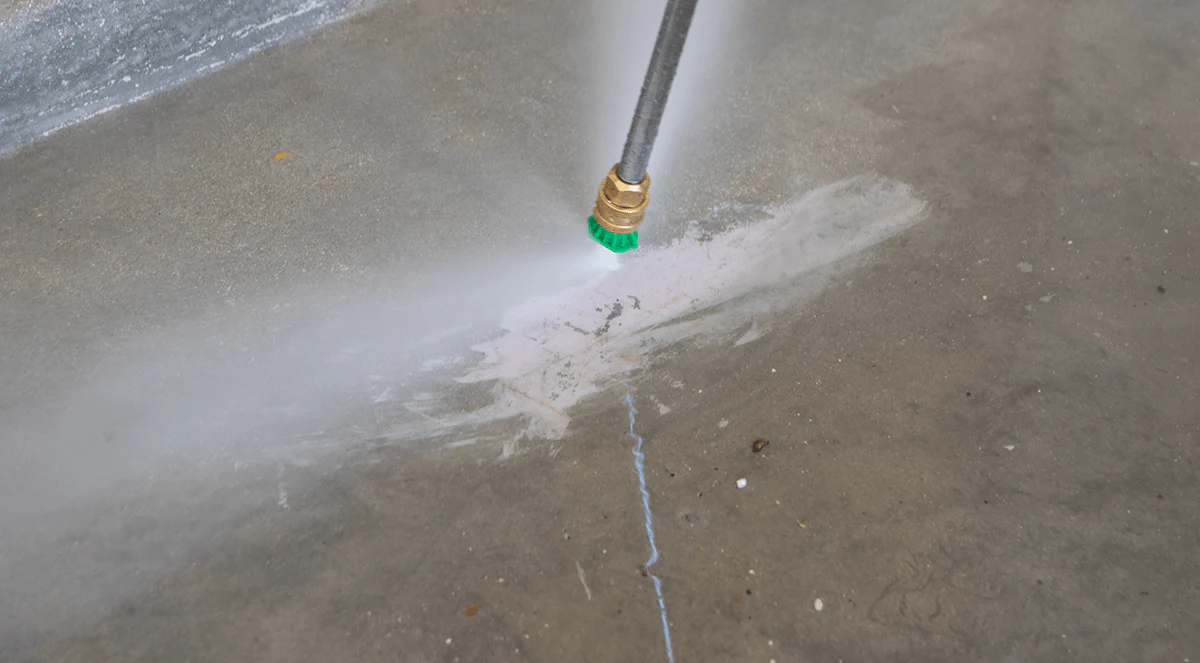
A pressure washer is the most effective tool for deep cleaning concrete. Use a pressure setting between 1,500 and 3,000 PSI — enough to blast out embedded grime without damaging the surface. Stay at least 6–8 inches from the surface and keep the nozzle moving in a consistent pattern to avoid streaking.
Use a 25-degree fan tip for general cleaning and a surface cleaner attachment for large flat areas — it gives more even results than a single wand. Work in sections, rinsing downslope so dirty water doesn't flow back over clean areas.
For sealed concrete, use lower pressure (1,200–1,500 PSI) to avoid stripping the sealer prematurely. After pressure washing sealed surfaces, inspect for areas where the sealer has worn or peeled, and plan to reseal.
Removing Oil and Grease Stains
Fresh spills: Blot (don't rub) as much as possible with absorbent material like kitty litter or sawdust. Let it sit for 15–30 minutes, then sweep. Apply a concrete degreaser or dish soap with a stiff brush, scrub, and rinse thoroughly.
Set stains: Old oil stains require a concrete degreaser left to dwell for 10–15 minutes before scrubbing. Several treatments may be necessary. Poultice products (a paste that draws the oil out of the concrete as it dries) can be effective on deep stains. For heavily stained areas near garage doors or parking spots, grind and reseal for the cleanest result.
Rust Stains
Rust on concrete usually comes from metal furniture, fertilizer, or water with high iron content. Use an oxalic acid-based cleaner specifically formulated for concrete — it's available at hardware stores and dissolves rust without damaging the surface. Wear gloves and eye protection, apply per directions, scrub, and rinse well. Don't use muriatic acid unless you know exactly what you're doing — it can etch and damage concrete if used incorrectly.
Mold, Mildew, and Algae
Shaded patios and walkways in Western Arkansas are prone to mold and algae growth, especially after wet seasons. A mixture of one part household bleach to three parts water, applied and scrubbed with a stiff brush, kills mold and algae effectively. Let it dwell for 10 minutes, scrub, and rinse thoroughly.
For ongoing prevention, applying a penetrating concrete sealer reduces the porous surface that mold needs to take hold. In heavily shaded areas, trimming back overhanging vegetation increases airflow and reduces recurring growth.
Paint and Tire Marks
Paint on concrete is best removed with a concrete-safe paint stripper or chemical remover designed for masonry. Tire marks (the rubber deposit left by peeling out) respond well to repeated pressure washing with a degreaser. Deep or dark tire marks may require grinding to fully remove.
When to Reseal After Cleaning
After a thorough cleaning, inspect your concrete sealer condition. Signs that resealing is needed: water no longer beads on the surface, the surface looks dull or faded, or you can see the sealer peeling in spots. Let the concrete dry completely — at least 24 hours after pressure washing — before applying a new sealer coat. Call Wagner Concrete Co. at (479) 551-1642 if you'd like a professional assessment.