A concrete patio is one of the best investments you can make in your outdoor living space. It adds functional square footage to your home, requires almost no upkeep compared to wood decking, and lasts 30–50 years when properly installed. This guide walks through everything you need to plan and build a patio you'll actually use — and that adds real value to your property.
How Big Should a Patio Be?
The most common mistake in patio planning is undersizing. A patio that fits a table and four chairs, but leaves no room for a grill or foot traffic around the furniture, feels cramped from day one. As a general starting point:
- Small patio (150–200 sq ft): Seats 4, limited furniture arrangement options
- Medium patio (300–400 sq ft): Comfortable seating for 6–8, room for a grill station or fire feature
- Large patio (500+ sq ft): Multiple zones — dining, lounging, and outdoor kitchen or fire pit area
Measure your intended furniture first, then add at least 2–3 feet of circulation space on all sides. It's easier to plan larger upfront than to extend a slab later.
Patio Design and Shape
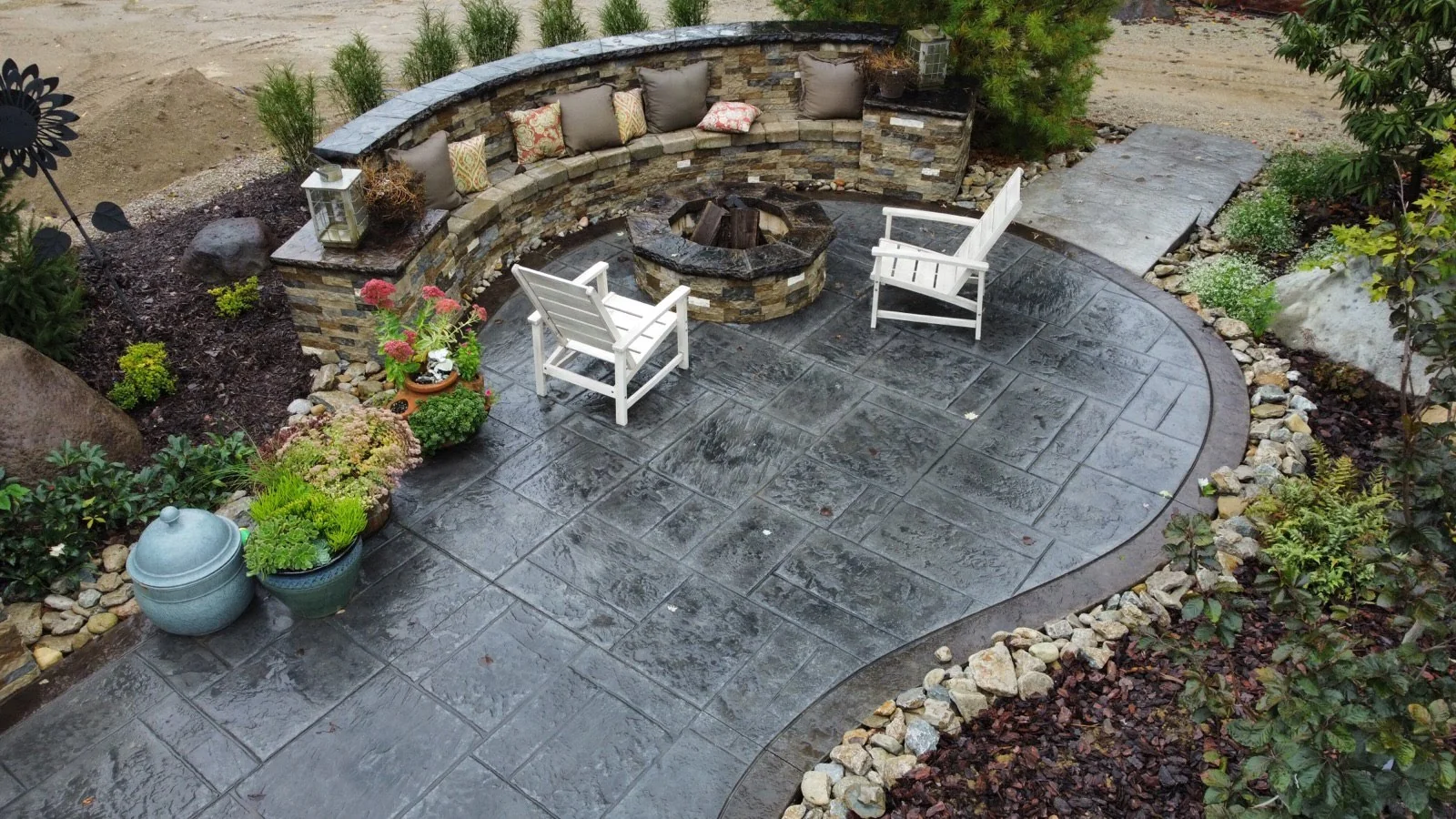
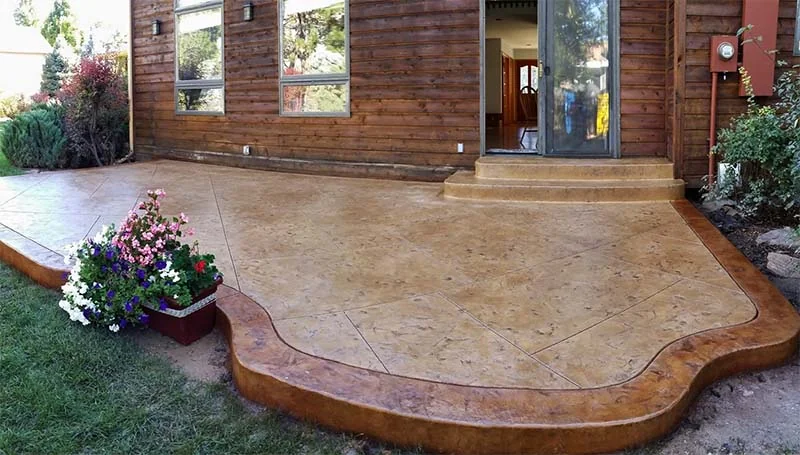
Standard rectangular patios are the most economical to form and pour. Curved edges, multiple levels, integrated steps, and angled corners all add labor and forming time, which increases cost. That said, a well-designed patio that responds to the shape of the yard and the architecture of the house will look more intentional and add more value than a plain rectangle.
We'll discuss layout options and mark out the area before any work begins so you can visualize the space and make adjustments before concrete is poured.
Finish Options for Concrete Patios
Plain gray concrete is practical but not particularly appealing. Here are the most popular finish upgrades:
- Broom finish: The standard — linear texture from a broom dragged across the wet surface. Provides traction, looks clean and utilitarian.
- Exposed aggregate: The top layer of cement paste is washed away to reveal the natural stone aggregate below. A textured, natural look that's very durable and slip-resistant.
- Stamped concrete: Patterns pressed into the wet surface — flagstone, cobblestone, slate, brick, wood plank. Combined with integral color, this creates the most visually striking results.
- Colored concrete: Pigment added to the mix before pouring. Works with any finish type to move away from standard gray.
- Salt finish: Rock salt pressed into the surface and washed away after curing leaves a subtle, dimpled texture. Popular for pool decks in Western Arkansas.
Drainage: The Detail Most People Skip
A patio that pools water after every rain becomes unusable and can direct water toward your foundation. Every patio we install is sloped slightly away from the structure — typically 1/8 inch per foot — to ensure water moves off the surface and away from the house. In areas with heavy downpour events (which Western Arkansas gets frequently), we also consider where that water will go once it leaves the patio.
What Does a Patio Cost in Northwest Arkansas?
A standard broom-finished concrete patio in Western Arkansas runs $8–$12 per square foot installed. Stamped and colored finishes run $14–$20 per square foot. For a 300 sq ft patio, that's roughly $2,400–$3,600 for standard concrete and $4,200–$6,000 for a stamped finish — including labor, materials, and sub-base preparation.
These ranges reflect our actual pricing in the Northwest Arkansas area. We provide free written estimates with a detailed breakdown — call or text (479) 551-1642 to schedule yours.
Timeline: From Estimate to Using the Patio
Once we've confirmed the project, most patios are completed within 1–2 days of active installation. The concrete then needs 24–48 hours before light foot traffic and 7 days before heavy furniture is placed. Full curing strength is reached at 28 days. You'll be using your patio well within a week of the pour.